Sunday, 4 April 2010

Icy Waterfall

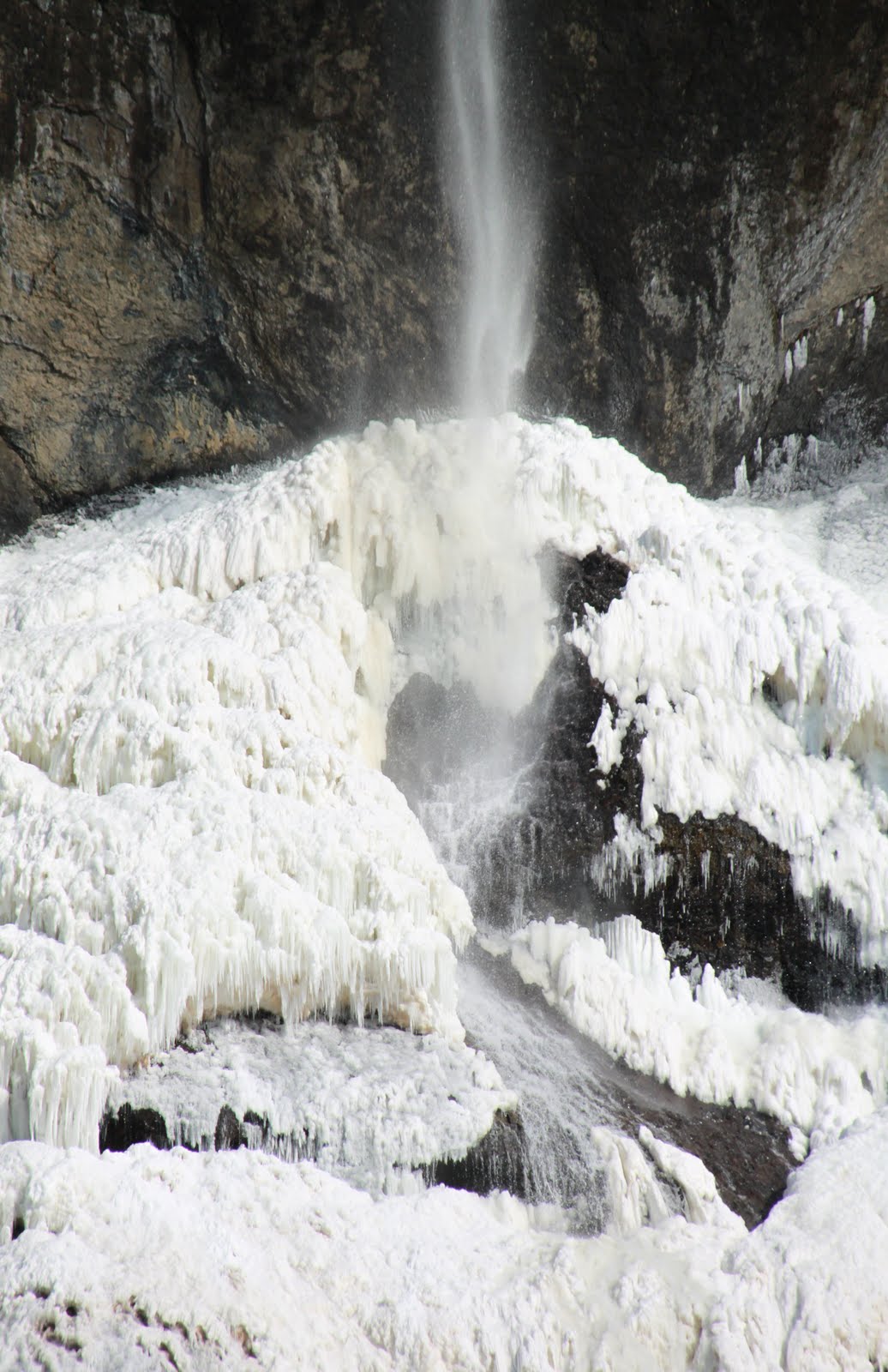
Not far out from Vik, we found this waterfall alongside the road.


We decided to stop and walk up the side of the waterfall and see the icicles.
We didn't get too close, because pieces of ice were falling off spasmodically, and the made a huge noise as they crashed onto the frozen waterfall. We decided to not get too close!


Of course there was the normal throwing stone and ice into the frozen river, and standing on thick ice on the river, but not too far out!


Vik and the Mýrdalsjökull Glacier

After an eventful day, we got to Vik to our first Farmhouse. Here was our view....gorgeous. The glacier in the background is the Mýrdalsjökull glacier

The farm had a field of Icelandic horses. The Icelandic horses are used on farms and for horse riding. In Summer, horse riding is a very popular activity with tourists. The horses arrived in Iceland in the 9th and 10th century from Scandinavia. They are about 1.3 metres tall, and suited to the harsh climates of Iceland. The kids enjoyed patting them.

The following morning we had a lovely walk along the beach at Vik. We have been to all sorts of interesting beaches in Europe with different coloured sand, and pebbles of all colours and sizes. This was the first beach we have been to where the sand was black. It was fantastic, and felt great to walk on and let run through your hands.


The view back from the beach was great, the black sand in the foreground, the winter grass in the middle, and the Mýrdalsjökull glacier in the background under blue sky.
It was Easter Sunday, we had the entire beach to ourselves.....only our footprints were there.


The sea stacks are basalt sea stacks. The highest one stands at 66 metres tall. Folktales of Iceland involve many of stories of how the environment was formed (much like Australian Aboriginal Dreamtime). One folk tale says that the sea stacks were trolls which were caught outside when the sun rose, and they turned to stone.

The run off water from the Mýrdalsjökull glacier flows down into the sea here. The water was freezing from the river.

A lonely Protestant Lutheran church sits on the hill

Saturday, 3 April 2010

Volcano Eyjafjallajökull

Before we came to Iceland, a volcano had become active and been spurting out lava for 10 -14 days. The car hire company gave us a map of how to get near the volcano, and where to go to get the best possible views. The volcano was not far from Gullfoss, and we decided to see if we could see it, but not get too close! The volcano is called Eyjafjallajökull.

The directions were to a valley called Fljótsdalur. From the valley we could see the smoke coming from the volcano but no lava.

So we decided to climb the hill to see if we could see anything.
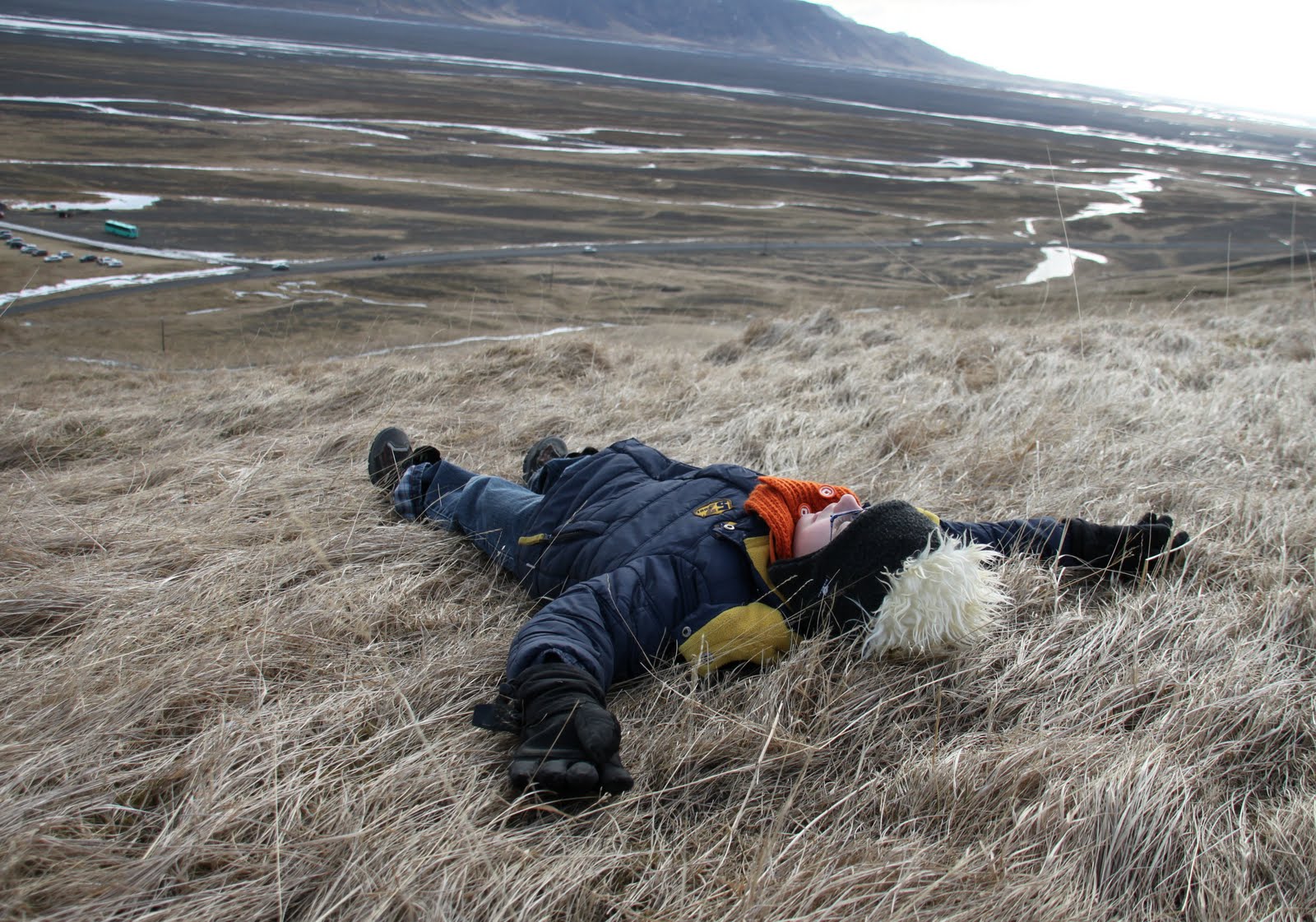
Can you see the cars in the background? Our car is down there somewhere!

It was great to sit (or lay) on the Winter grass and watch the sky,

and the smoke come out from the volcano.


By the afternoon, the clouds started to come over, and it was getting a bit difficult to see the volcano. The eruption had subsided by this stage, but it was still cool to see!
You can see here the smoke coming from the volcano, and if you look really really really closely, you can see a little bit of an orange tinge

On the way back to the car the kids enjoyed throwing rocks at the frozen river to see if they could break through the ice. You can see some of the rocks that didn't break through!

Gullfoss Waterfall

Our next stop was not too far away to Gullfoss Waterfall. We stopped at the visitor centre for lunch and had a delicious lamb soup and bread rolls. Then we walked down to the waterfall. We didn't really know what to really expect, but we certainly didn't expect this!

WOW....our photos don't do any justice to how spectacular the waterfall actually looked!


Gullfoss is Iceland's most famous waterfall. It was a double cascade of water and it is 32 metres high. The water begins at Lángjökull Glacier, which flows into the Hvítávatn Lake. Icy cold water then flows 40km along the Hvítá River before it gets to Gullfoss.

The top cascade


The lower cascade


Some of the water spray hits the side of the rockface and freezes. Some of the water spray drifts over the to winter grass and freezes over the blades of grass.

It was spectacular!

Geysirs Galore

Up the road from the National Park was a geothermal area of Geysirs. The first think you notice is the smell, the kids thought the smell of sulphur in the air was disgusting, but hilarious.
"It smells like a bad fart!"


The geysirs were amazing. The largest geysir, called the "Great Geysir" only erupts 2-3 times during the day. Back in the 1950's tourists used to throw rocks into the geysir to try and set it off, and blocked the geysir. An earthquake in 2000 dislodged some of the blockage and when it erupts, it is supposed to be spectacular, sadly the Great Geysir was quiet when we visited.

In front of the Great Geysir, who was sleeping!


It's brother "Strokkur" erupts every 5 - 10 minutes. The temperature of the water is about 120°C.

We waited with all the other tourists, with cameras ready to go. When it erupted it was incredible. We have never seen anything like it.


Waiting, waiting, waiting


A blue bubble appears....


and boom, the geysir erupts! WOW!


and once again, incase you missed it!


The blue bubble of water expanded really quickly

(we were amazed that we actually caught it on camera!)


the beginning of the eruption


and up it goes, 30 metres high